I will NOT accept constructive criticism on the title … and we’re going to assume that dwarf planets are still a sub-type of planet and hence are also planets!
In case you don’t know, Pluto is an extremely cold dwarf planet right behind Neptune. It used to be called a planet up to 2006 when astronomers made the decision to demote it to dwarf-planet. Despite this, Pluto is one of the most interesting planetismals in our neighborhood and has some amazing features on its surface and orbiting it too!
Let’s talk about some of these cool facts, starting with what’s on Pluto’s surface.
Pluto has an Extra Heart: Tombaugh Regio
Tombaugh Regio, sometimes nicknamed the “heart” of Pluto, is a huge surface feature that’s roughly the size of Mexico* and named after Pluto’s discoverer Clyde Tombaugh.
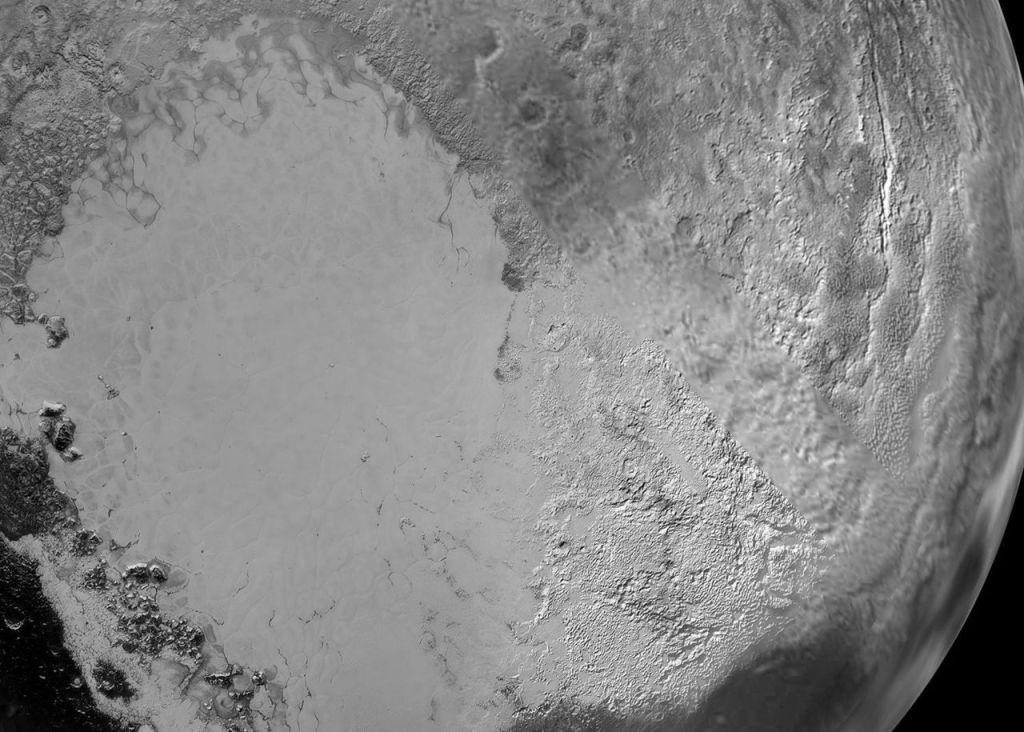
Mexico might be a small-ish country to us, but this equates to roughly 20% of Pluto’s surface area. That’s a staggering amount for one area!
The heart can be split into 2 distinct areas or “lobes”, with the smoother left side called Sputnik Planitia. New Horizons images from as early as 2015 showed the Planitia likely being covered by a smooth layer of fine nitrogen, with water ice mountains about 2.6 x smaller than Mount Everest dotted around. Sputnik Planitia could have been an impact crater that has smoothed over with nitrogen, but astronomers today are still unsure as to how the lobe became so smooth.

At the bottom left of the big image above is a dark area called Cthulhu Macula, but what’s really important is that there’s a slightly lighter substance that’s spilling over onto Sputnik from these dark regions. This is really good evidence that Pluto has glaciers (ice flow), and might still be active today!
Coming back to Sputnik Planitia itself, it seems this nitrogen layer is split up. You might not see it well in the center but you can definitely see it on the outskirts. As explained by J Suarez et al, these are likely convection cells that indicate Pluto is geologically active, and this paper by Singer et al suggests Sputnik Planitia might engage in cryovolcanic resurfacing.
I recommend reading the Singer et al paper to learn more about Pluto’s surface. It’s a long paper but it contains a lot of great images and information!
There’s no flowing water on Mars, but there might be on Pluto!
Despite the average temperature of Pluto’s surface being around 40 Kelvin (that’s -233 degrees Celsius), there is good evidence of liquid water existing in Pluto! Yes that’s right, IN Pluto!
Bagheri et al suggests that similarly to Jupiter’s moons, water flow might be occurring in Pluto and some of Uranus’ moons too! The paper suggest radiogenic heating, which is when radioactive decay inside the planet causes heating and thus melting of the water ice inside.
This subsurface ocean would have to be near the core because of the extremely cold temperatures near the surface of Pluto. Hence the current idea is that Pluto is made up mostly of a silicate (rich in Silicon and Oxygen) core, water ocean layer, ice layer, and crust!
It’s in a Binary System with its Main Moon
Binary systems in stars are more common than you think (about 30%), but are extremely rare in our solar system! There are only 4 binary planet or “double planet” candidates in our Solar system, but since they’re all dwarf planets they cannot be classified as such until the IAU hire me. Pluto and Charon are the best example we have of a binary planet.
Charon and Pluto have a mass ratio of 0.12:1, meaning Charon is about 12% of the mass of Pluto. Ideally for binary planets, the mass ratio should be roughly 1-to-1, but Pluto and Charon are the closest to this ideal in the solar system!
For reference, the Earth and Moon have a ratio of 0.012:1, which is 10x smaller than Pluto & Charon. Yet, some scientists actually have the audacity to call it a binary system!
Pluto has One of the Most Geographically Diverse Surfaces Discovered so Far!
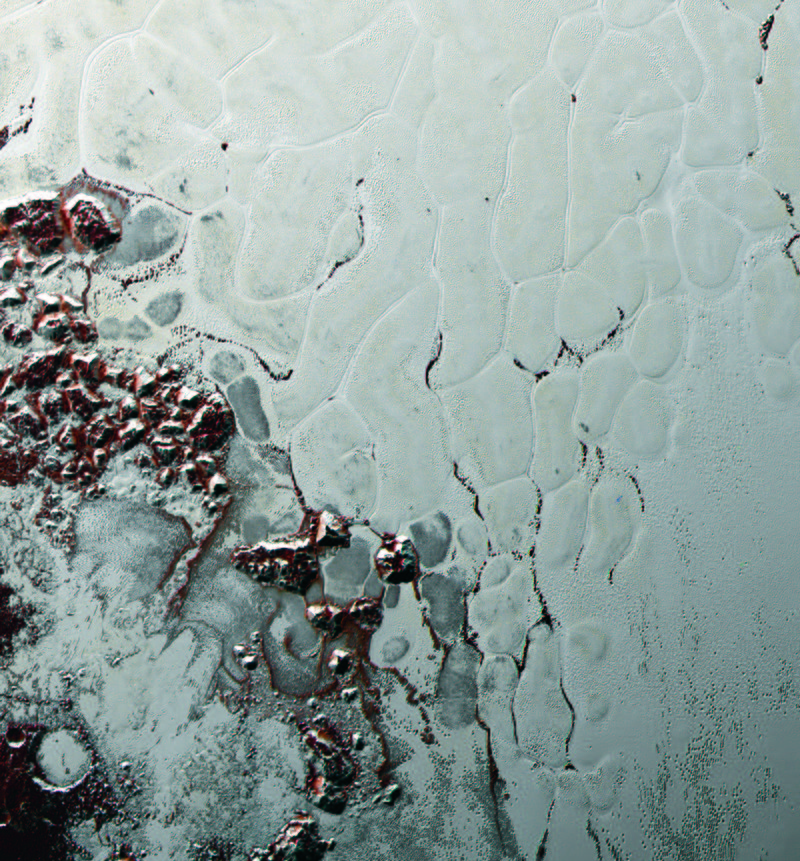
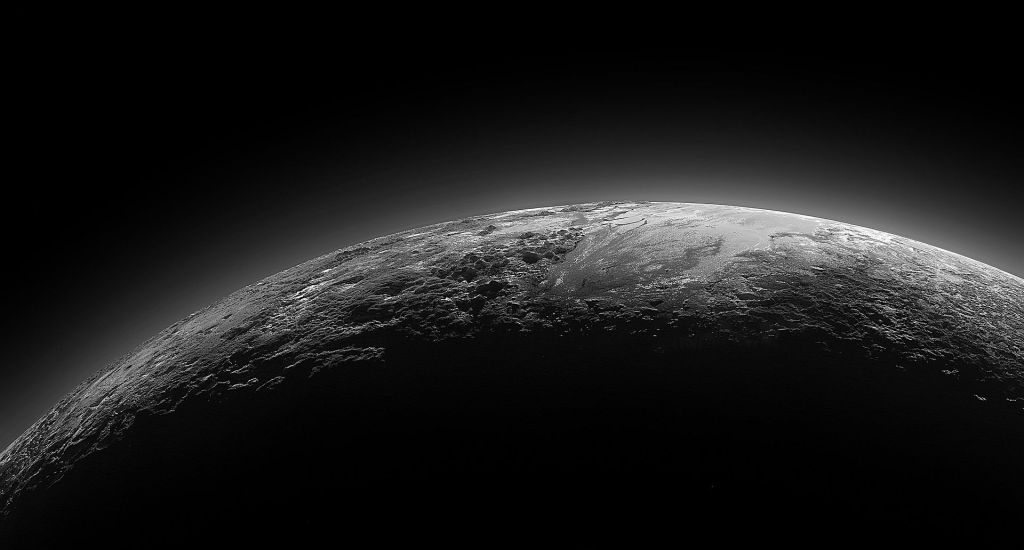
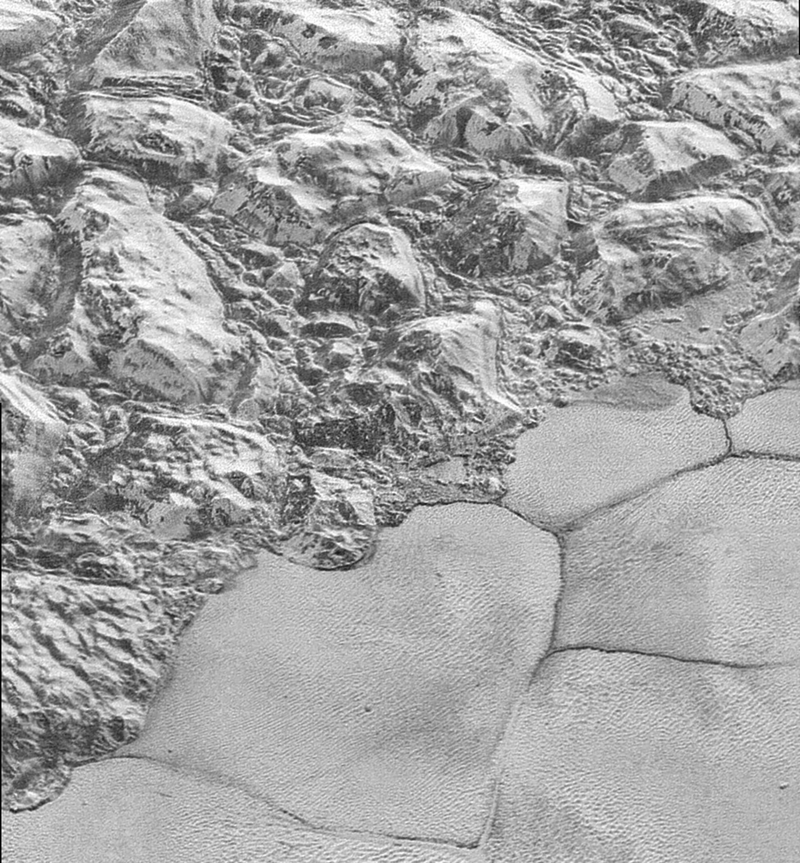
As stated before with Sputnik Planitia, we have nitrogen plains, water ice mountains, and glaciers. We also have cryovolcanic activity, and hence also tectonic activity.
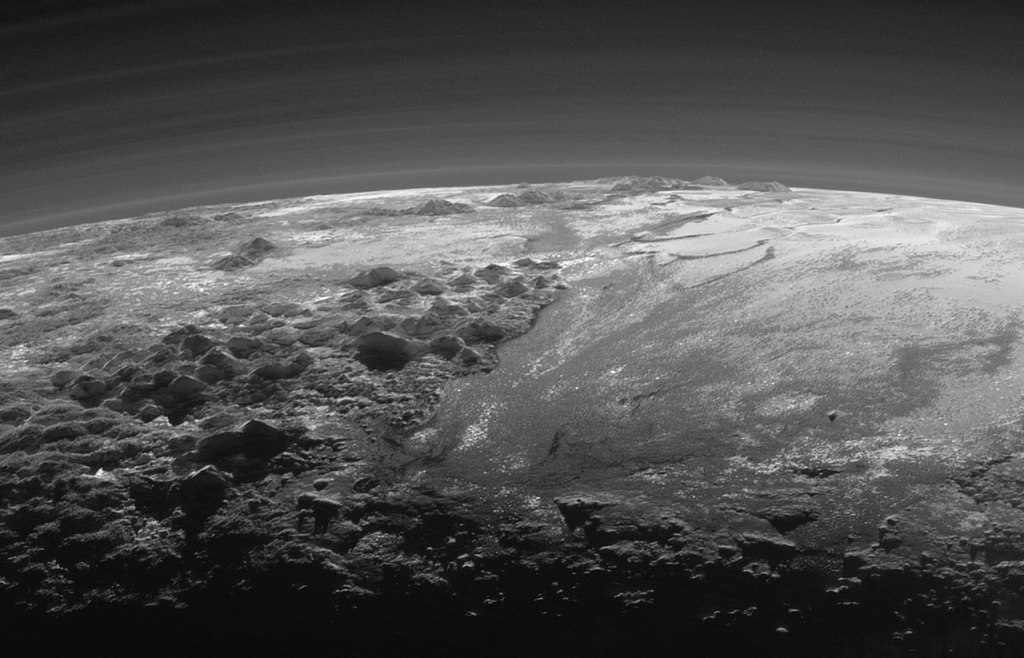
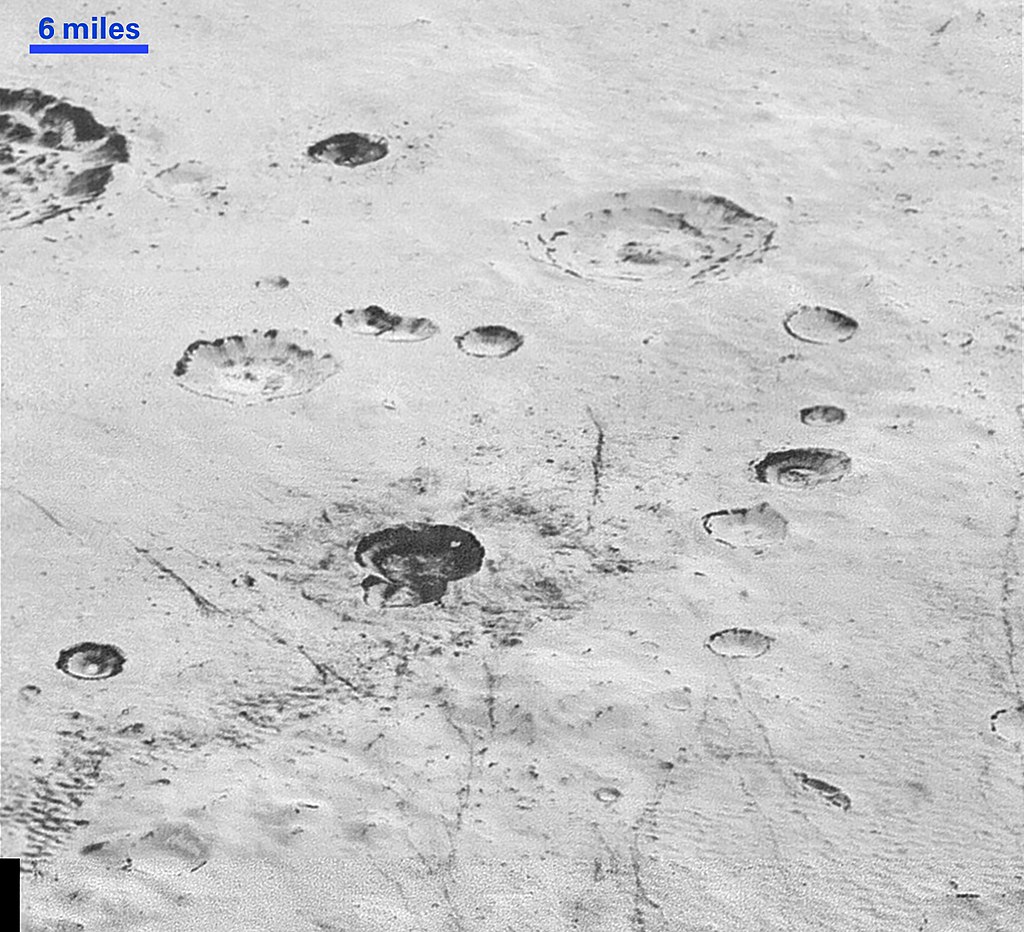
Pluto also feature methane dunes, craters, uplands, canyons, extension faults, darkening from tholins (a compound made by icy materials interacting with solar rays), and the list goes on and on!
I couldn’t explain every little feature on this planet otherwise we’d be here all year, so instead I’m going to to bombard you with high detail images from New Horizons.
It’s Just Nice
My last reason is that I just like Pluto. It’s pretty, it’s mysterious, and radioactive!
That’s all for this week. If you want a video version of this post, check out my YouTube channel where I talk about this while knitting some Pluto themed socks!
* Size estimated from Tombaugh Regio’s diameter (1590km) and circle area formula (pi*radius^2).
 Space With Seti
I’ve always been a little confused about Tombaugh Regio and Sputnik Planitia. So is Sputnik a region inside of Tombaugh, like a province inside a country? Or are they two separate things?
LikeLiked by 1 person
Yes I think so, Tombaugh Regio is the heart, and Sputnik is the western lobe and is a part of Tombaugh Regio. It’s a very unique situation since we don’t usually deal with heart-shaped structures outside of the body!
LikeLiked by 1 person
Pluto will never lose its fans 🙂
LikeLiked by 1 person